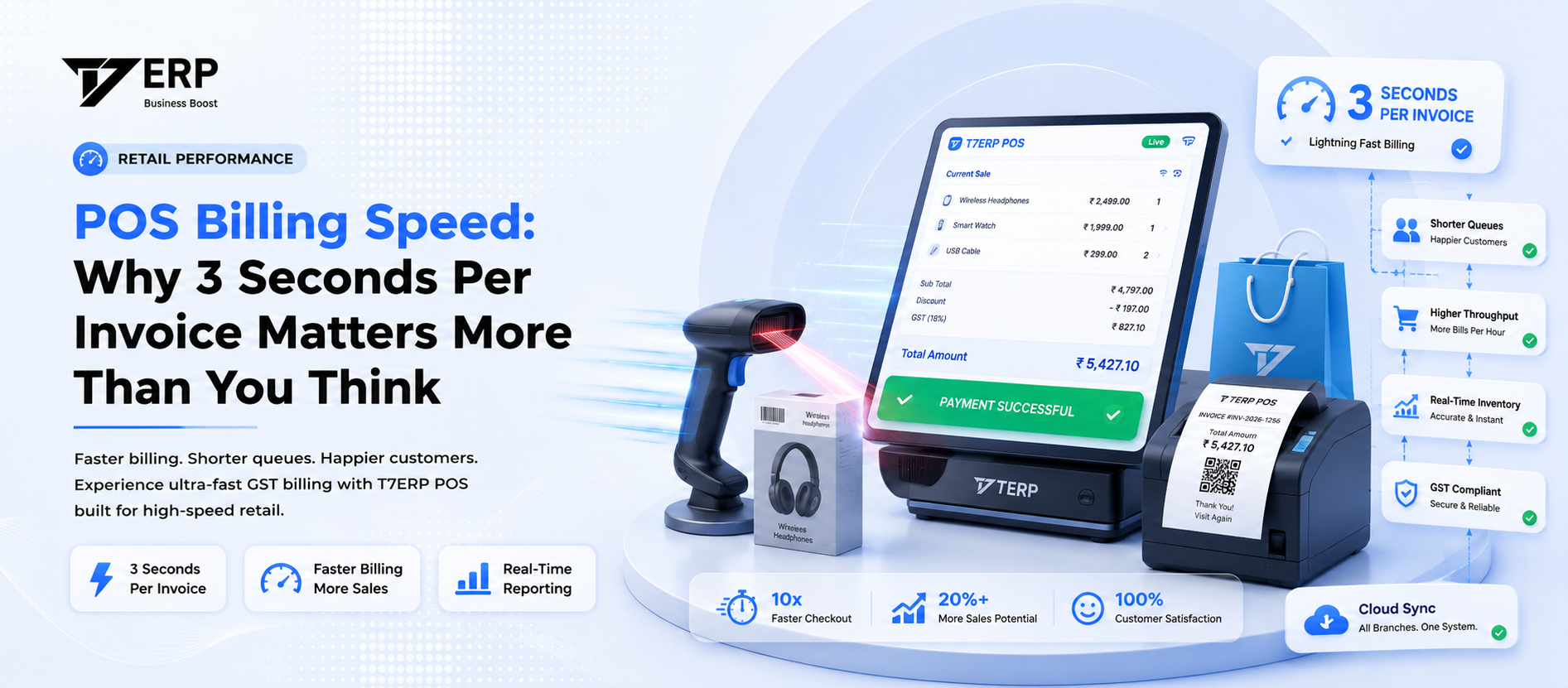
Key Takeaways
- Why billing speed directly affects daily revenue.
- The hidden operational costs of slow POS systems.
- How GST processing can either slow down or streamline checkout.
- The technology stack behind high-speed billing counters.
- What Indian retailers should evaluate before choosing a POS platform.
3 Seconds
Ideal invoice processing target for modern POS systems
20–30%
Potential queue reduction during peak billing hours
70%+
Retail purchase decisions influenced by checkout experience
Every extra second at the billing counter quietly costs sales, customer satisfaction, and staff productivity.
A slow counter means long queues and lost sales. Learn the technology behind ultra-fast GST billing and how modern POS systems optimize checkout performance.
01Customers don't measure your software. They measure waiting time
A customer standing in a queue does not care whether your billing software has 500 features. They care about one thing: “How quickly can I complete my purchase?” Long queues create friction. Friction creates abandoned purchases.
Consider a retail outlet handling 1,000 invoices daily. If each transaction takes 8 seconds longer than necessary, that adds over 2 hours of cumulative waiting time across customers every day.
Key Impact
Billing Speed Impact Cards
3 Seconds
Fast Checkout
Frictionless checkout, happy customers.
20–30%
Fewer Queue Delays
Peak hour queue throughput improvement.
70%+
Customer Experience
Checkout speed determines store loyalty.
02Why a few seconds matter more than most retailers realise
Retail profitability often depends on transaction volume. A store generating hundreds or thousands of invoices daily cannot afford inefficient checkout processes. Lost minutes create operational bottlenecks like longer queues, lower billing throughput, cashier fatigue, and customer dropouts.
03GST billing speed depends on system architecture
Many businesses assume GST billing itself causes delays. The real issue is usually how the POS software handles GST calculations. Modern billing engines calculate GST rates, discounts, promotions, loyalty benefits, round-offs, and payment settlements in milliseconds.
Older systems often process these tasks sequentially, causing screen freezes or print delays. The best POS systems treat GST processing as a background function rather than a customer-facing bottleneck.
Processing Flow
High-Speed POS Architecture
1. Barcode Scan
SKU read in milliseconds
2. Product Lookup
Real-time pricing matched
3. GST Calculation
Parallel tax engine processing
4. Inventory Update
Live stock count synchronized
5. Invoice Ready
Receipt printed & payment closed
04The technology behind ultra-fast billing counters
Fast billing is rarely about faster cashiers. It is usually about better system design. Modern POS platforms optimize database performance, product lookup speed, offline billing capabilities, and real-time inventory updates.
Solutions like T7ERP POS are designed around billing speed because modern retail operations require both compliance and performance at scale.
05Speed affects more than customer experience
Slow billing affects staff efficiency, counter utilisation, store throughput, and daily revenue capacity. Imagine two stores with identical footfall. Store A bills customers in 3 seconds, while Store B takes 9 seconds. Over thousands of transactions, Store A serves significantly more customers without increasing manpower.
Comparison
Fast vs Slow Checkout
- ✓High checkout throughput, zero queues
- ✓Happy customers, positive retail brand reviews
- ✓Cashier fatigue minimized, high productivity
- ✓Scale operational billing volume easily
- ✓No lost revenue from abandoned sales
- ✗Line out the door during peak campaigns
- ✗Frustrated cashiers making billing mistakes
- ✗Lost hours and queues leading to cart dropouts
- ✗Must open extra billing counters (staffing expense)
- ✗Unproductive cashiers, customer complaints
06Why festive seasons expose POS weaknesses
Many retailers only discover billing limitations during high-demand periods like Diwali, Navratri, wedding season, or clearances. A POS system that works comfortably at 200 invoices per day may struggle at 2,000.
Retailers using integrated platforms such as T7ERP gain better visibility because billing, inventory, reporting, and compliance operate within a unified ecosystem.
Stress Warning
Festive Season POS Bottlenecks
Diwali Rush
Critical Queue Lag
Heavy transactional loads freeze legacy databases. Stress test required.
Navratri Sales
Counter Bottleneck
Billing counters peak throughput limit. 12+ sec waiting times occur.
Wedding Season
Gift Packing Lag
Cluttered SKUs list slowdown checks. Barcode index errors spikes.
FY Closing
Inventory Sync Delay
Heavy database size blocks immediate invoice print response.
07The future of billing is invisible speed
The fastest POS systems are often the least noticeable. Customers simply scan, pay, and leave. The objective is to remove friction from the entire transaction journey via faster barcode scanning and touch-optimised interfaces.
08Practical weekly POS performance rhythm
A fast checkout experience requires regular monitoring. Below is the recommended operational rhythm for POS systems auditing.
Rhythm Cycle
POS Performance Operating Rhythm
Daily
Monitor checkout speed, check printer response times, audit scanner errors.
Weekly
Audit slow transactions logs, analyze cashier billing metrics, verify stock sync.
Monthly
Analyze peak-hour reports, check systems performance log, inspect POS hardware.
Quarterly
Conduct database cleanup, perform load stress testing, verify growth readiness.
Common mistakes retailers should stop making
How T7 ERP helps
T7 ERP POS billing is built for speed, processing GST calculations, discount checks, and receipt generation in under 3 seconds. The system operates offline, preventing internet lags from slowing down checkouts, and syncs data to inventory in the background.
Want T7 ERP to handle this automatically?
Auto GSTR-1, GSTR-2B reconciliation, e-Invoice, and e-Way Bill in one platform built for Indian retailers.
Conclusion
Billing speed is not a technical metric. It is a business metric. Every second saved at the counter improves customer experience, increases transaction capacity, and reduces operational friction.
Amit Shah
Retail Technology Consultant · T7 ERP
Amit has spent over 16 years helping Indian retailers modernise billing operations, inventory management, and store technology. He advises multi-store retailers, distributors, and retail brands on improving checkout efficiency, compliance, and customer experience.
Related Articles
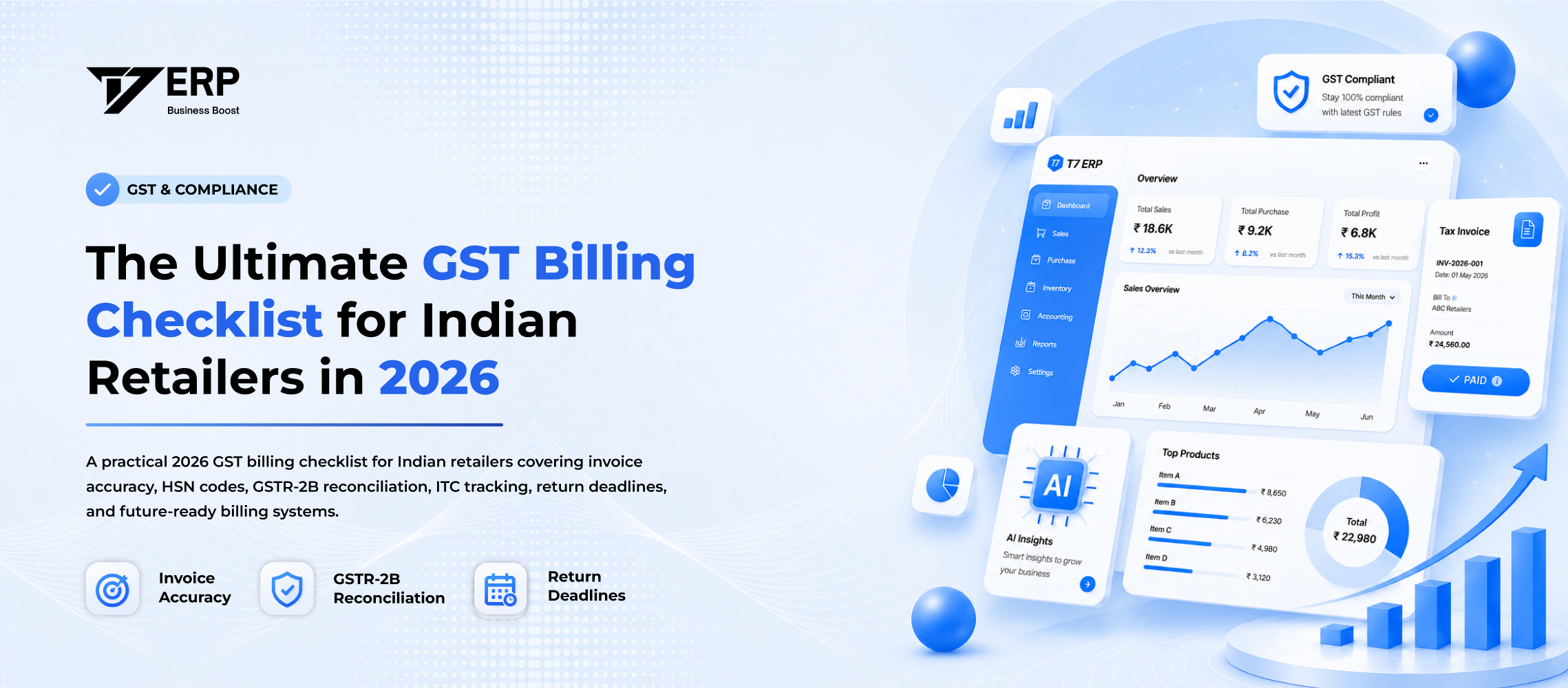
The Ultimate GST Billing Checklist for Indian Retailers in 2026
12 min read
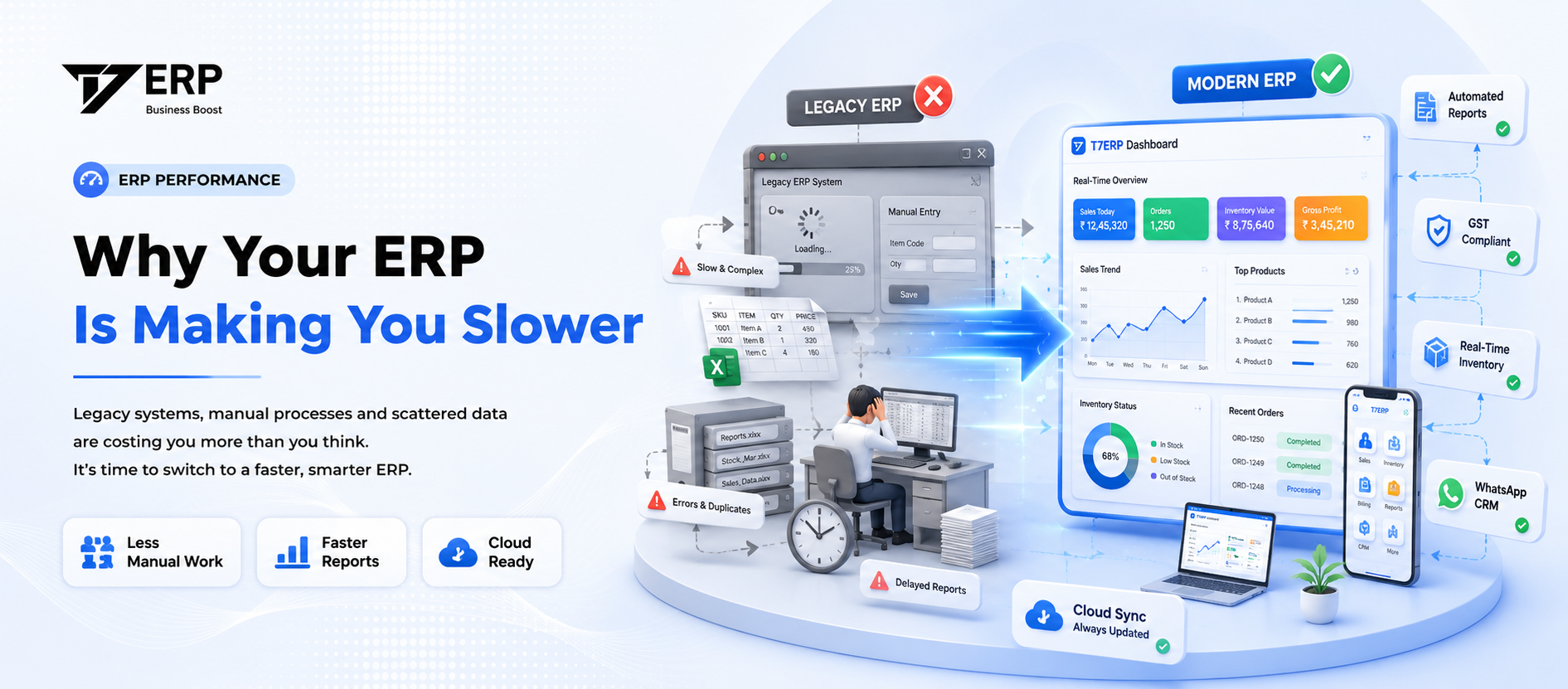
Why Your ERP Is Making You Slower (And What to Do About It)
7 min read
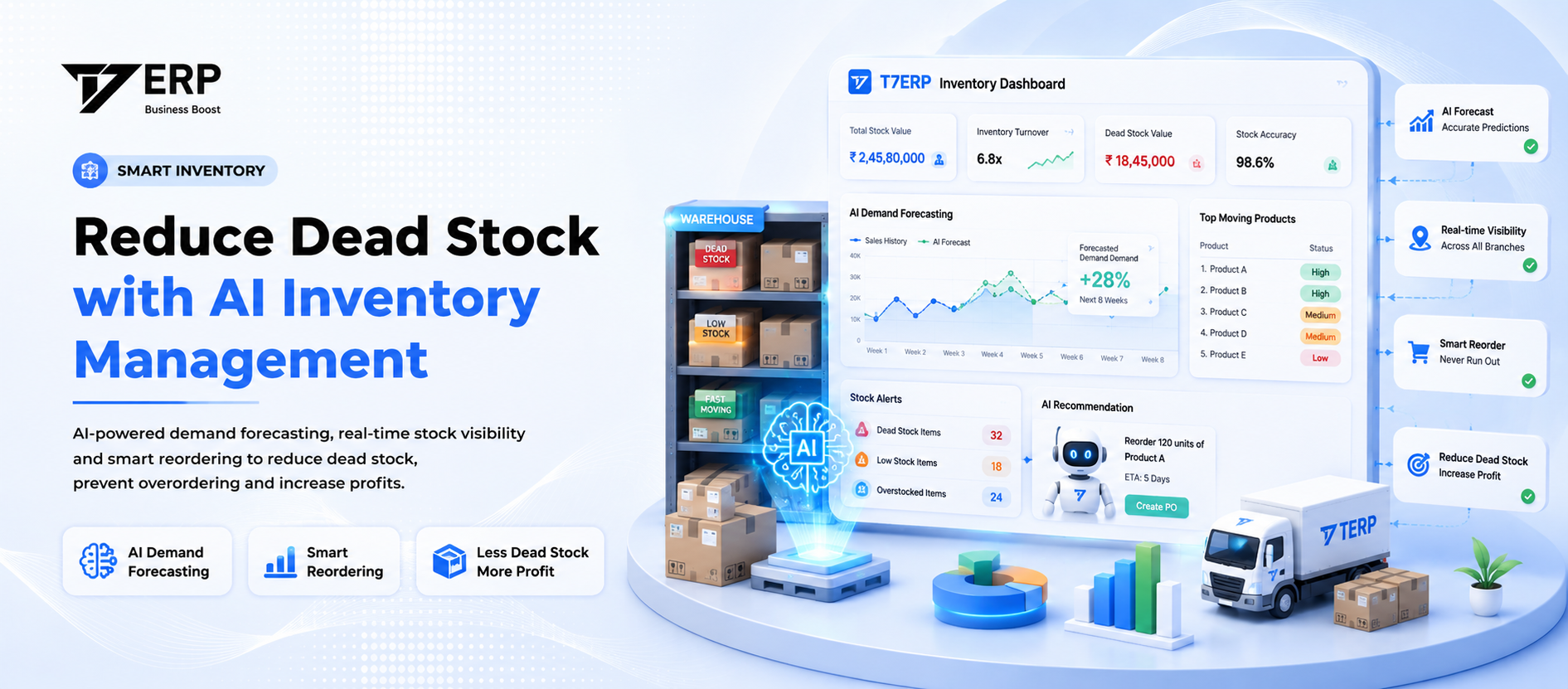
Reduce Dead Stock and Overordering with AI Inventory Management
7 min read

WhatsApp for Business: How Indian Retailers Are Using It to Sell More
7 min read