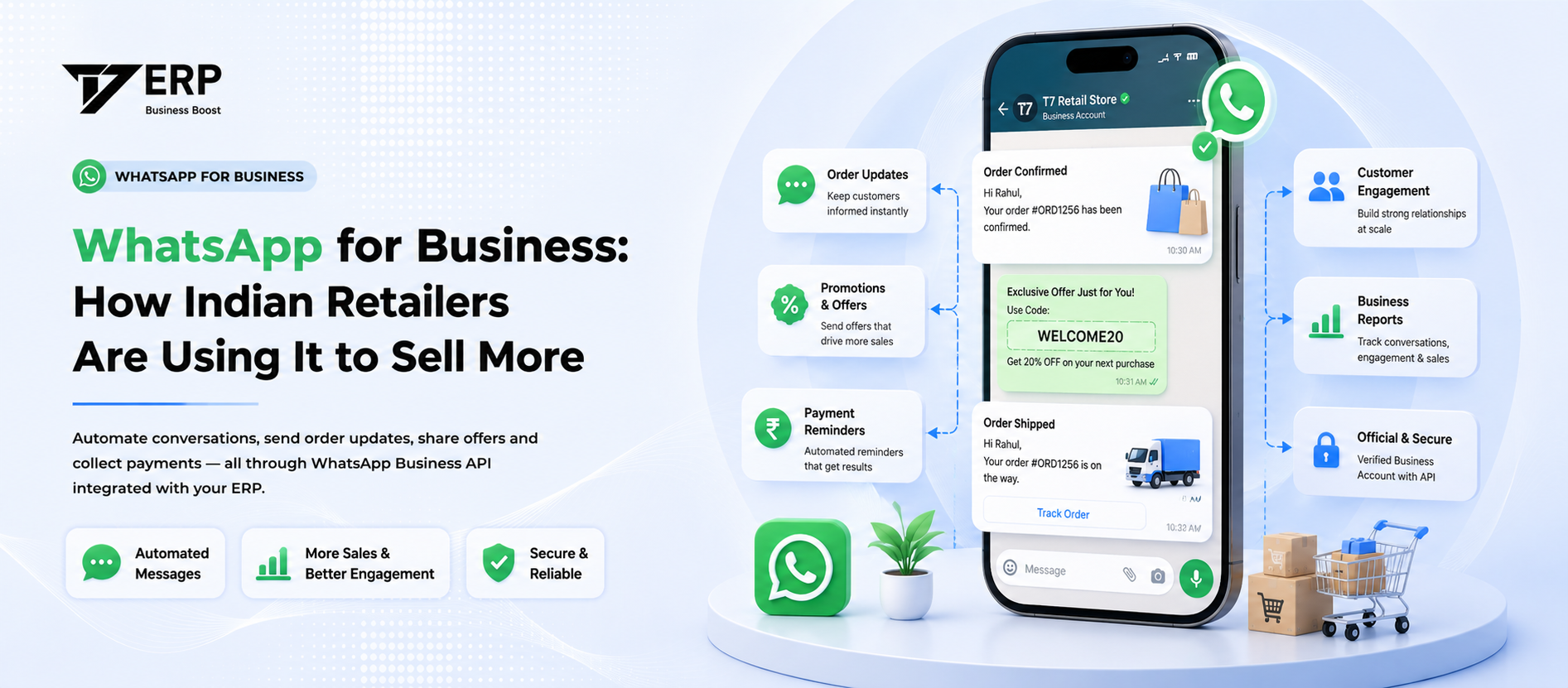
Key Takeaways
- The difference between WhatsApp Business App and the Meta Business API — and which one you actually need.
- How to set up automated order confirmations, shipping updates, and payment reminders.
- How to build a WhatsApp broadcast list that doesn't get you banned.
- What a real WhatsApp sales funnel looks like for an Indian D2C brand.
- The exact weekly rhythm to run WhatsApp as a sales and retention channel.
500M+
Indians actively use WhatsApp — more than any other country
98%
Open rate for WhatsApp messages vs 20–25% for email
3x
Higher conversion rate from WhatsApp orders vs SMS for Indian D2C
You’re replying to customer messages one by one from your personal number — and you’re losing sales between the gaps.
WhatsApp is where your customers are. Move beyond manual messaging with the Meta WhatsApp Business API for order automation, sales funnels, and broadcast lists that convert.
01WhatsApp Business App vs Meta Business API: know which you need
Most D2C founders start with the free WhatsApp Business App on their phone. It’s fine for 20–30 customer conversations a day. Once you’re beyond that, it becomes a liability.
The Business App has hard limits: one device, limited multi-agent support, broadcasts capped at 256 contacts who must have your number saved, and no native ERP integrations. The Meta Business API is a connection between Meta’s infrastructure and your software, offering multi-agent support, event-based automation flows, and unlimited broadcast capability to opted-in customers.
02Getting started with the Meta Business API: the honest path
The API doesn’t come directly from Meta to you. You access it through a **Business Solution Provider (BSP)** like Interakt, Wati, AiSensy, or Zoko, or natively through your ERP if supported.
Setup Flow
Meta WhatsApp Business API Setup
1. Verify Manager
Facebook Business Manager verification
⚠ FB approval required first
2. Choose a BSP
Select Wati, Interakt, AiSensy, or T7 ERP native integration
⚠ Compare conversation rates
3. Approve Number
Dedicated business number for Meta approval
⚠ Allow 2–5 days for approval
4. Build Templates
Create and submit outbound message templates
⚠ Template review takes 24–48h
5. Connect ERP/OMS
Link order system to trigger automated alerts
⚠ Connect Webhooks correctly
6. Go Live ✓
Run a full end-to-end test before launching
Note: You cannot use a personal WhatsApp number. Get a dedicated SIM first.
03The four message flows every Indian D2C brand needs
Most brands use WhatsApp like a newsletter. That’s wrong. WhatsApp works best as a transactional channel first, promotional channel second. You must set up order confirmations, shipping updates, payment reminders, and reviews alerts first.
Message Flows
4 Essential Message Flows
Order Confirmation
Order ID, items list, billing total, expected delivery window.
Shipping Update
Courier tracking link, expected delivery date, quick contact support.
Payment Reminder
Invoice link, outstanding amount due, direct payment deadline.
Review Request
One-question feedback survey, short link, under 30 words.
T7 ERP connects directly with WhatsApp via BSP integration — raising an invoice automatically triggers the appropriate WhatsApp message without manual steps.
04Building a broadcast list that doesn't get you banned
WhatsApp takes opt-in seriously. Sending broadcasts to customers who haven’t opted in leads to flags and permanent phone number bans. Opt-in must be explicit. Make sure to separate transactional opt-in from marketing opt-in during checkouts. Keep your block rates below 2% by managing hygiene.
05WhatsApp as a sales channel: what an actual funnel looks like
Conversion rates are higher when you build interactive chat funnels rather than spamming lists. Introduce customers to top collections, prompt catalogs based on keywords, send in-chat payment links, and trigger restock reminders post-purchase.
Sales Funnel
WhatsApp D2C Sales Funnel
1. Discovery
Customer clicks ad/web WhatsApp link
60-70% continue
2. Consideration
Automated catalogue & video sent
40-50% continue
3. Conversion
Direct payment link sent in chat
25-35% convert
4. Retention
15-day restock or accessory alerts
06Pricing: what WhatsApp Business API actually costs in India
The API is charged per 24-hour **conversation** window, not per message. Meta offers 1,000 free service conversations monthly. Beyond that, utility conversations cost Rs 0.08–0.12, authentication OTPs cost Rs 0.12–0.18, and marketing broadcasts cost Rs 0.60–0.90 in India. A growing brand usually spends Rs 2,000–5,000/month.
07Your weekly WhatsApp operating rhythm
WhatsApp is not set-and-forget. The brands seeing results check templates block rates, plan useful broadcasts, and run hygiene list cleanups.
Calendar
Weekly Operating Rhythm
⚡ Daily Automated Tasks (Zero Human Effort)
Order confirmations, shipping alerts, COD payment reminders, and feedback reviews fire automatically based on ERP transactions.
Review Metrics
Check open/block rates, edit poorly performing templates.
Content & Templates
Draft promotional broadcasts, submit message template for Meta review.
Broadcast Send
Send broadcasts to opted-in list, assign follow-up agents.
Common mistakes Indian D2C brand founders should stop making
Conclusion
WhatsApp is already where your customers are. Done right, WhatsApp reduces support loads, improves cash flow through faster payment collections, and creates a direct sales channel that costs a fraction of paid ads.
Sneha Rajan
D2C Growth Consultant & WhatsApp Specialist · T7 ERP
Sneha has 9 years of experience helping Indian D2C brands build customer communication systems that scale — from first order to repeat purchase. She has set up WhatsApp Business API integrations for over 80 brands across fashion, food, and home categories, and writes about what actually works for Indian founders navigating the Meta ecosystem.
Related Articles
The Ultimate GST Billing Checklist for Indian Retailers in 2026
12 min read
Why Your ERP Is Making You Slower (And What to Do About It)
7 min read
Reduce Dead Stock and Overordering with AI Inventory Management
7 min read
Multi-Branch Retail in India: The 5 Biggest Operational Mistakes
7 min read